IS/ISO 9001:2015 & IS/ISO 37001:2016 Certified | SBTi Registered
Science based, cost effective climate change solutions
Science based, cost effective climate change solutions

Decarbonization and Energy Efficiency Projects
Afforestation Project Registered under VCS Registry
Carbon Credit funds syndicated from sale of Carbon Credits
Carbon Credit Registrations Projects
Carbon accounting is the measurement and reporting of greenhouse gas (GHG) emissions generated by an organization, project or product both directly and indirectly. It is important because it helps businesses identify major emission sources, comply with regulations, and plan a realistic path towards carbon neutrality.
Scope 1 covers direct emissions from GHG sources owned or controlled by the organization, such as fuel combustion in company vehicles, boilers, or generators, and on-site. Scope 2 includes indirect emissions from purchased electricity, heat, or steam. Scope 3 accounts for value-chain emissions such as suppliers, product use, and logistics — often the largest share of emissions.
A decarbonization strategy goes beyond compliance. It lowers operating costs through efficiency, reduces climate-related risks, opens new opportunities for green financing, and strengthens brand reputation with customers and investors.
Yes, our strategies are customized to sectors like cement, steel, automotive, IT, FMCG, and energy. For instance, while manufacturing industries may benefit from process efficiency and fuel switching, service industries may focus more on renewable energy and supply chain decarbonization.
At a minimum, once a year ideally aligning with annual sustainability or ESG reporting. However, large emitters may benefit from quarterly or even real-time tracking using digital monitoring tools.
We follow global standards such as the GHG Protocol, ISO 14064, and align with initiatives like the Science-Based Targets (SBTi) to ensure credibility and global recognition.
Yes, we create stepwise strategies that combine emission reductions, renewable energy adoption, and offset mechanisms such as verified carbon credits to achieve carbon neutrality or net zero goals.
We engage with suppliers, use spend-based modeling, and adopt sector benchmarks to estimate emissions when primary data is not available, ensuring a transparent and credible methodology.
Investors increasingly demand climate disclosure. Transparent carbon accounting improves ESG ratings, enhances access to sustainability-linked loans, and ensures alignment with global reporting standards like TCFD and CDP.
Clear emission reduction targets, prioritized action areas, defined timelines, and an implementation roadmap that improves both environmental performance and financial savings.
Sustainability reporting is the practice of disclosing a company’s environmental, social, and governance (ESG) performance in a structured format, making it easier for stakeholders to assess the company’s impact and progress.
It enhances transparency, builds stakeholder trust, meets regulatory requirements, and helps companies demonstrate leadership in sustainability, which is increasingly a factor in investor and consumer decisions.
We prepare reports aligned with globally recognized frameworks such as GRI (Global Reporting Initiative), SASB, CDP, TCFD, and SEBI’s Business Responsibility and Sustainability Report (BRSR).
Yes, the top 1,000 listed companies must prepare BRSR reports as mandated by SEBI. Even for non-mandated companies, voluntary reporting enhances competitiveness and investor appeal.
Reports typically cover energy and water usage, waste management, employee welfare, diversity, supply chain sustainability, climate risks, governance structures, and stakeholder engagement.
Well-prepared reports not only satisfy regulatory requirements but also position a company as a responsible brand, attract ESG-conscious investors, and highlight innovation in sustainability practices.
Yes, we provide independent assurance services to validate reported data, which enhances credibility and avoids risks of greenwashing.
Alongside detailed compliance reports, we also design summary reports, infographics, and digital dashboards that make sustainability performance clear and engaging to wider audiences.
Yes, consistent and transparent reporting helps companies achieve higher ESG scores, which is critical for investor confidence and global market access.
Typically annual, but leading companies also provide interim updates or quarterly dashboards to demonstrate continuous improvement.
It is a structured process to evaluate how climate change could affect a company’s operations, supply chains, assets, and financial stability, both in short and long term.
With rising climate-related events like floods, heatwaves, and regulatory shifts, businesses that fail to anticipate risks may face severe direct and indirect financial losses and reputational damage. Assessments help companies stay resilient and competitive.
Physical risks (such as extreme weather, droughts, heatwaves, and floods) and transition risks (including policy changes, carbon pricing, and shifts in market preferences).
We use climate models, scenario analysis (IPCC pathways), and financial modeling tools to evaluate risks under different global warming scenarios.
Yes, they align with global and national disclosure frameworks like TCFD (Task Force on Climate-Related Financial Disclosures) and SEBI’s risk reporting requirements.
Corporates, banks, insurers, investors, and infrastructure developers who need to demonstrate resilience, expand business and protect long-term investments.
Yes, beyond identifying risks, we recommend practical strategies such as renewable integration, water conservation, nature-based solutions, energy audits and conservation, climate-resilient infrastructure, and supply chain diversification.
Investors increasingly require proof of climate resilience. Businesses that disclose risks and have mitigation and adaptation plans are more likely to access green finance and attract global capital.
Yes, we quantify potential revenue losses, cost escalations, and capital requirements to provide a financial perspective on climate risks.
At least every 3-4 years, or more frequently for high-risk sectors like energy, agriculture, and infrastructure.
A biodiversity assessment evaluates ecosystems, species, and habitats affected by a project or business activity. It helps organizations understand their ecological impact, secure project approvals, and design mitigation strategies, in nutshell, assisting business to conduct operations in harmony with nature
Mining, Infrastructure, Oil and Gas, Real Estate, Chemical and fertilizer, Pharmaceutical, Metal and steel, Automation Sector, Energy projects, and governments must conduct these assessments to comply with environmental clearance norms and global sustainability expectations.
International frameworks such as IUCN guidelines, CBD (Convention on Biological Diversity), TNFD (Taskforce on Nature-related Financial Disclosures, Global Reporting Initiative (GRI) and India Businesses and Biodiversity Initiative (IBBI) Standards are followed to ensure credibility.
Flora and fauna surveys, land use patterns, habitat quality & fragmentation analysis, biodiversity sensitivity of the area, and potential threats to habitat and species. Identification of protected (PA) and key biodiversity areas (KBA), Identification of impact, dependencies, risk and opportunities on nature.
Yes, we design mitigation and offset strategies such as risk reduction, afforestation, wetland restoration, and habitat corridors to balance development with conservation.
Absolutely. We conduct stakeholder consultations with local communities and design management plans to actively involve them to ensure benefit sharing and make biodiversity management inclusive and culturally sensitive.
Protecting biodiversity enhances a company’s ESG ratings, reduces reputational risks, and attracts sustainability-focused investors. Biodiversity management is also an indicator of forward business as it considers the active contribution of natural capital.
Yes, biodiversity data is structured to support the global standard of TNFD framework, helping organizations disclose nature-related risks effectively.
Yes, we provide long-term monitoring services to track changes in biodiversity and assess the effectiveness of mitigation measures. We also assist in execution of the biodiversity management plan.
Biodiversity assessments and effective execution of management plans prevent regulatory delays, reduce conflict with communities, protect brand image, prepare businesses for future-regulations, and ensure sustainable long-term operations.
It is a specialized service that helps organizations generate, validate, and trade carbon credits or Renewable Energy Certificates (RECs). It ensures projects comply with global carbon markets and maximizes revenue from emission reduction activities.
Carbon credits provide an additional income stream by monetizing emission reductions. They also improve ESG ratings, attract green investors, and help companies meet their climate commitments.
Renewable energy, energy efficiency, waste-to-energy, biofuels, afforestation, and carbon capture projects typically qualify under international standards.
It involves project identification, baseline emission study, validation by accredited auditors, registration with a recognized registry, and monitoring/reporting of emission reductions for credit issuance.
Carbon credits are earned for reducing greenhouse gas emissions, while RECs represent renewable electricity generation. Both can be monetized, but they serve different markets and compliance needs.
We align projects with frameworks like CDM, VCS (Verra), and Gold Standard, ensuring credibility and acceptance in global markets.
Yes, through programmatic approaches and aggregation models, even smaller projects can be bundled to earn carbon credits.
We help clients identify the right buyers, negotiate contracts, and manage risks in volatile carbon markets.
Yes, we provide end-to-end advisory for both, depending on project type and client goals.
Returns vary depending on credit prices and project scale, but many projects recover validation and registration costs within 2–3 years while continuing to generate revenues for 7–10 years.
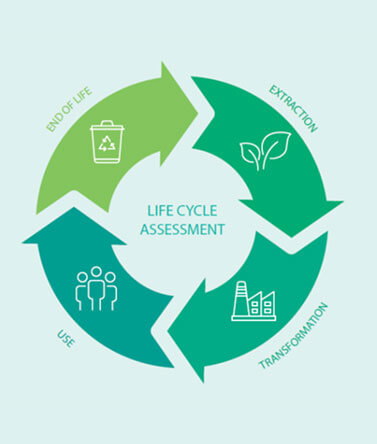
LCA is a scientific method to evaluate the environmental impacts of a product, process, or service across its entire life cycle — from raw material extraction to disposal.
It helps organizations understand hidden environmental costs, improve product sustainability, comply with green procurement rules, and make better strategic decisions.
ISO 14040 and ISO 14044 provide internationally recognized principles and frameworks for conducting LCAs.
Raw material extraction, material processing & manufacturing, distribution & transportation, phase and end-of-life (disposal or recycling).
By highlighting sustainability credentials, businesses can differentiate products in eco-conscious markets and meet customer expectations.
Yes, we cover sectors like manufacturing, FMCG, textiles, packaging, automotive, construction, and energy.
We use reliable databases, industry averages, and modeling tools to fill gaps, while maintaining transparency about assumptions.
Absolutely. LCA identifies stages with the highest environmental impact, guiding R&D towards more eco-friendly product designs.
Yes, it supports resource efficiency, waste reduction, and product recycling strategies.
Investors gain insights into environmental risks, customers trust eco-labeled products, and regulators appreciate compliance with sustainability standards.
MITCON’s Climate Change and Sustainability division is backed by a certified team of experts, we bring deep expertise in energy audits, carbon assessments, and nature-based solutions—empowering industries to meet sustainability goals with confidence and credibility.